WordPress Is Breaking
WordPress is breaking because it's too heavy and the ecosystem is too unpredictable.

WordPress was the easy choice for years. One dashboard, one tool, one way to manage your website. It made sense: write a post, boom, a page appears. It worked for over a decade, grabbing 23% of the web in 2015 and climbing to 43% by 2022.
It didn’t start as a CMS that ran half the web.
In 2003, Matt Mullenweg and Mike Little
I moved off it in 2017, but still have a fondness for it (afterall, it’s where I truly started building for the web, beyond static HTML, CSS & JS).
At the time, the rest of the web felt like it was speeding up. New frameworks, better tooling, faster everything. WordPress just felt stuck. The same old problems, the same old workarounds.
The Plateau
That feeling hasn’t gone away. WordPress hit a plateau. Share sat around 43% from 2022 through 2024, ticked up to 43.6% in early 2025, then finally slipped.
WordPress usage of all websites rose from 23.3% in 2015 to 43.2% in 2022, held around 43% through 2024, peaked at 43.6% in early 2025, then fell to 40.7% by September 2026.
This isn’t because the core is broken. It’s because the weight of the ecosystem has grown too heavy. Imagine a client site burdened with twenty-six plugins. Every update is a roll of the dice. You patch one, and something else goes wrong. It’s a balancing act that never ends.
There’s another elephant in the room: AI. Not because it builds good websites. It doesn’t, yet, at least not without the help of a developer who can guide it. What it has done is make WordPress less of a default.
A new brochure site used to start in wp-admin because that was the path of least resistance. Now some of those projects start in a builder with an AI overlay, or as a scaffold someone generated and then had to clean up. A lot of that work is throwaway. Some of it ships anyway.
Either way, WordPress isn’t automatically in the room anymore.
The Political Mess
Then there’s the political mess. In 2024, WordPress.org decided to cut
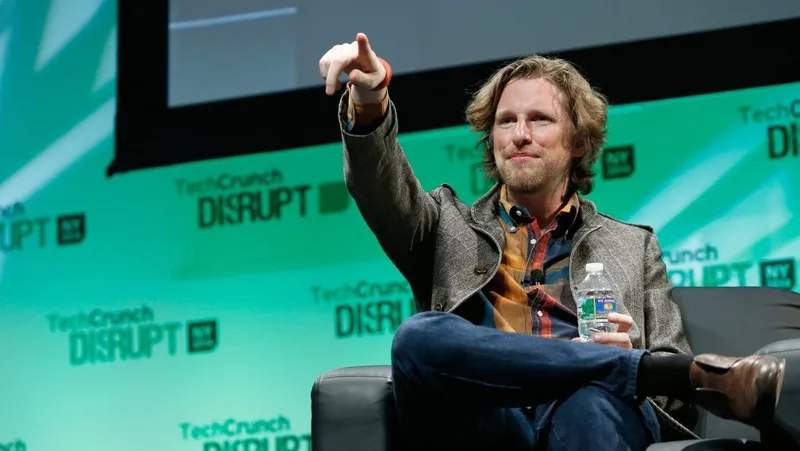
If that wasn’t enough, WordPress.org took control of the
Who really controls your website?
When you’re stuck with a host of plugins maintained by others, you’re at the mercy of their update schedules, their security records, and their politics. WordPress core might be lean, but the plugin ecosystem is heavy and unpredictable.
Where People Are Heading
Over the past year I’ve spoken to more and more developers who are hitting the same wall I did back in 2017. They’re frustrated. They’re leaving. Not because WordPress was ever terrible, but because they’re tired of carrying the weight.
They’re moving towards a different model. One that gives you control over your own code.
- Developers crave the freedom to build, not babysit plugins with unpredictable roadmaps.
- UX designers want their visions realised consistently, not undermined by rogue page builders.
- Copywriters need a single source of truth so their words appear the same everywhere.
- Marketers demand reliable pages that load fast.
The Split Approach
The answer is a split approach: separate the content, code, and hosting. Tools
like
| Layer | WordPress | Split |
|---|---|---|
| Content | Dashboard and plugins | Sanity or Storyblok |
| Code | Themes and page builders | Astro or Next.js |
| Host | PHP on a shared box | Vercel or Netlify |
| Reach | One website | Website, app, kiosk, email |
What About Headless WordPress?
There’s a middle path, and it’s a real one. Keep WordPress as the CMS, throw out the theme, and put Astro or Next.js in front of the REST API or GraphQL. Editors keep the dashboard they already know. The content stays put. The front-end gets fast.
That gets you some of the split without the migration. The cost is that you still run WordPress. Plugins still update. PHP still needs a box. Preview, drafts, and webhooks are fiddlier than a CMS that was built as an API. And the political mess doesn’t go away because you stopped using the theme. If WordPress.org cuts off your host, plugin and theme updates from the directory go with it. The site and the API keep running. The supply chain does not.
For a site that’s already deep in WordPress, headless can be the right next step. For a new build, or a rebuild where the content model is already a mess, leaving altogether is cleaner. You don’t inherit twenty-six plugins. You don’t spend the next two years treating WordPress as a database with a login screen.
How It Actually Works
In WordPress, a page is usually a pile of blocks or a page-builder layout. The copy lives inside that page. Change a headline on the homepage and you still have to hunt it down on the campaign landing page, in the footer, in the email template some plugin generated three years ago.
The split model inverts that. Content is structured data. A promo is a headline, a short description, a call-to-action, maybe an image. You define that shape once in Sanity or Storyblok. The site is a set of components that ask for those fields and render them. Update the promo, and every place that component appears updates with it. No version drift. No “which page did we forget?”
That also changes who owns what. Designers shape the component. Developers build it. Copywriters edit the fields without touching the layout. Marketers get a page that actually matches the design they signed off.
And because the content isn’t trapped in a theme, it doesn’t have to stop at the website. The same record can feed the rest of the digital ecosystem:
- Website — the marketing site, the docs, the blog.
- App — native or web, reading the same API.
- In-store kiosk — opening hours, offers, the screen on the counter.
- Email — campaigns that don’t go stale the week after you send them.
One source of truth. Many channels. That’s the point of a modern CMS. You now have a website that grows with you, not holding you back.
Where This Leaves Us
WordPress isn’t declining because it’s terrible. It’s losing its appeal because fewer people want to shoulder that extra weight anymore. The future is moving towards systems where every part of the digital presence is built for its role. Clear boundaries. Great UX. A promise of speed.
That split also means you’re free to bring in the tools you want, in the way you want. Email through Resend. Analytics through PostHog. A custom backend API when a form or a checkout shouldn’t live in the CMS. You’re not hunting for a plugin that almost does the job. You’re wiring up the right service and leaving the rest alone.
This shift isn’t just technical. I feel it’s a cultural move towards collaboration and clarity. It’s about building websites piece by piece, with every specialist doing what they do best. And in that space, there’s room for better work, more control, and a much smoother ride for everyone involved.
Edit (12/09/2026): Since publishing this post, Matt Mullenweg was ousted as the CEO of Automattic by his board, before subsequently re-instating himself and firing the board as the majority shareholder. You simply cannot make this stuff up.